Moving beyond guesswork: Why understanding an athlete’s current life phase is the missing key to sustainable excellence.

In 1993, when I moved to Bogotá and started my dual education working at a German International Company and studying International Trade at the same time, I faced a difficult decision: whether to come back into sports after that extreme back injury of 1992 that crushed my high elite stakes in shot put. The volleyball coach of the company’s team had watched me in the park having a bit of fun with some of the colleagues and approached me.
Yes, believe it or not, one of the sports I did during school was volleyball, as a setter, and I loved it. However, I was really scared about going back into sports because of the three months experience lying in bed and almost 6 months recovery without lifting anything. So, my mind was definitely not at a training or competition level. Nevertheless, the coach took his time to talk about everything and I sensed that time his real willingness to know what had happened to me and how that had affected me. Without putting pressure on me and by just offering an open space of communication and engagement he even offered me to help him out with the team during trainings and competitions. Slowly and steady I regained confidence in my body and in a question of around 6 weeks I was starting lineup. Many years have passed since and I have worked with several teams and mental coached players in different sports, being it volleyball, track, handball, football and field hockey. Two incredibly important factors in the development of any athlete are the distance between player and coach and the ability of a coach to balance challenging a player and supporting her/him. This in my opinion only can happen in an effective way, if a coach understands in which individual phase both her-/himself and the player are.
In the high-stakes world of elite sport, the margin for error is non-existent. A fraction of a second, a centimeter, or a single psychological misstep can define the development of a player and even a whole career. Recently, I read a compelling research paper by Kong, Collins, and Martindale (2025) titled “Finding ‘Just Right’: Optimizing Challenge and Support in Sport Coaching.” The authors mention a crisis facing modern coaches: the struggle to balance the demand for high-performance results with the growing necessity for athlete well-being and safeguarding.
The paper argues that coaches often fall into a „false dichotomy,“ believing they must choose between being tough (challenge) or being kind (support). It suggests that the solution lies in coaches developing higher emotional intelligence, psychological literacy, and cognitive flexibility to navigate this balance.
While I agree entirely with the diagnosis, I believe the proposed cure misses a critical practical reality. The paper assumes coaches have the bandwidth to perform deep, real-time psychological diagnostics on every athlete. My experience, both as a systemic mental coach, team staff and an observer of high-performance systems, suggests in my personal opinion a different root cause: some coaches are just untrained in psychology, some are trained but do not or just can not practice psychology; they are structurally overwhelmed. They miss the athlete’s phase and even their’s not because they lack care, but because they basically do not have a simple map enough to use when their plate is already overflowing with tactics, logistics, and media demands.
This is where the conversation must evolve. We cannot simply ask coaches to „be more psychologically flexible“ without giving them a tool to make that flexibility efficient. We need to bridge the gap between the need for individualized care and the reality of coaches’ cognitive load. The solution lies in integrating Erich’s Phase Model© into the daily fabric of coaching, transforming abstract psychological concepts into a tangible, actionable dashboard.
The Bandwidth Crisis: Why Good Coaches Miss the Mark
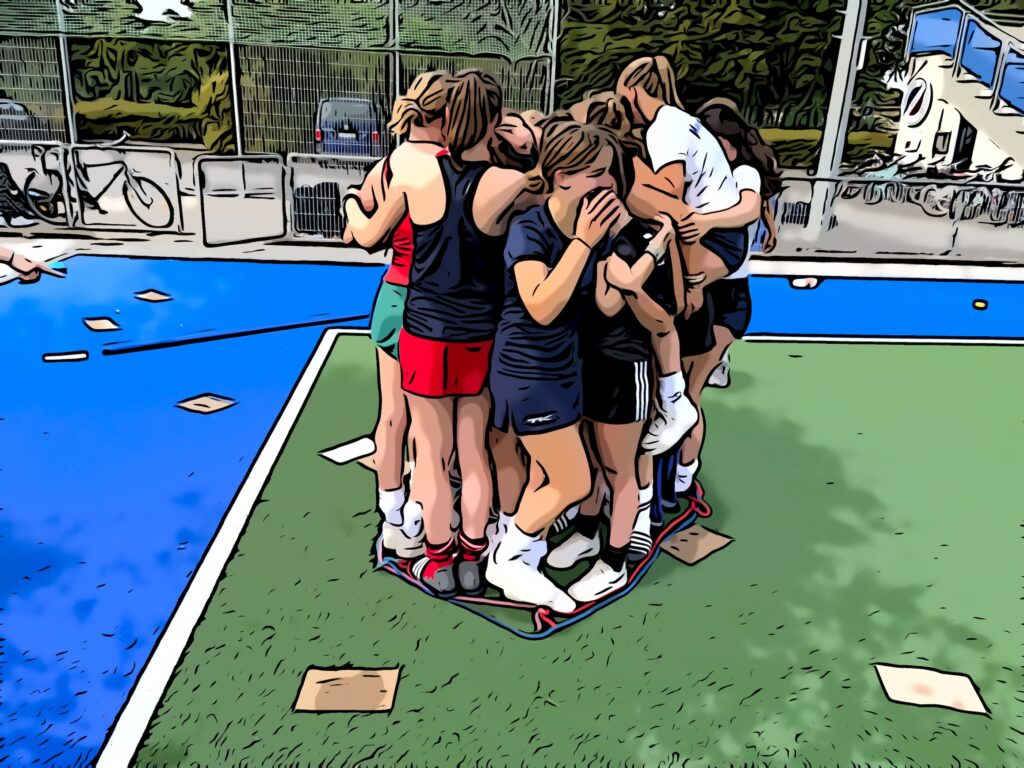
Let’s be honest about the life of a high-performance coach. Their day is a blur of periodization plans, video analysis, travel logistics, sponsor meetings, immediate crisis management and depending on their particular situation even other tasks or engagements. When a human brain is operating at maximum cognitive capacity, it defaults to heuristics—mental shortcuts. In coaching, this often manifests as „one-size-fits-all“ methods or the „coach as I was coached“ inertia described in the research.
The Kong et al. paper rightly identifies that coaches misapply concepts like „psychological safety“ (turning it into overprotection) or „trauma“ (confusing it with healthy adversity). Which I personally find incredibly intersting. The question is: why? Because without a clear framework, assessing an athlete’s internal state feels like abstract therapy—something they don’t have time for.
When a coach looks at an athlete who is underperforming, they see a technical problem to be fixed. They rarely see the Phase, or they might see it, but are not able to support the athlete in overcoming it. Please, do not understand me wrong, there are coaches out there that are able to do so, but these are the exemptions to the rule.
Here is the thing:
Is the athlete in a foundational ‘Dark Side’ phase, where their confidence and physical state are in turmoil, requiring a period of deep understanding and self-acceptance before any significant challenge can be safely applied?
Are they in a momentum-building ‘Quick Win’ phase, where the priority shifts to engineering immediate, tangible successes to reignite belief and create forward thrust?
Are they in a consolidation ‘Deep Conviction’ phase, where the desire to change is present, but the focus must shift to rigorous mental conditioning and structured self-talk to sustain effort through inevitable setbacks and getting slowly out of comfort zones?
Or are they maybe in a prosperous phase, where setting high challenging objectives might be the appropriate tool to keep and improve momentum?
Without a model to categorize these states quickly, the coach guesses. And when they guess wrong—applying heavy challenge to an athlete in a fragile „Acceptance“ phase—they risk causing the very trauma the paper warns against. The problem isn’t a lack of will; it’s a lack of Phase Literacy.
Or is the athlete going through another completely different phase?
Erich’s Phase Model© : The Operational Dashboard
This is where Erich’s Phase Model© moves from a theoretical concept to an essential operational tool. The model posits that life is not linear but moves in dynamic, overlapping phases influenced by specific factors (family, health, career, team, relationships, etc.). Crucially, each of these factors has its own Emotional State Curve.
For a coach, this model acts as a diagnostic dashboard. It simplifies the complex psychological landscape into a visualisable format that can be assessed in minutes, not hours. Instead of asking a coach to perform a full psychological evaluation, we ask the athlete to fill a simple questionnaire to plot the athlete’s current curves.
1. Identifying the „General Emotional Main Curve“
The research paper emphasises the need to distinguish between eustress (growth-inducing stress = “good stress”) and distress (harmful stress). The Phase Model provides the mechanism to do this. By mapping the athlete’s influencing factors, a coach can see if the General Emotional Main Curve is trending upward or downward.
Scenario: An athlete is struggling in training.
Without the Model: The coach pushes harder, thinking the athlete lacks resilience.
With the Model: The coach sees that while the „Sport“ curve is low, the „Family“ and „Health“ curves are in a steep „Dark Side“ phase. The General Main Curve is plummeting. The diagnosis is immediate: Challenge will break them; Support is the only path.
2. The Interconnectedness of Influencing Factors
Kong et al. note that coaches often fail to account for cultural backgrounds or personal history. The Phase Model formalizes this by listing specific Influencing Factors: Parents, Partner, Kids, Friends, Teachers, Work, Health, etc. In my work with athletes, I’ve seen how a dip in the „Partner“ curve can drain the energy needed for the „Sport“ curve. A coach armed with this model doesn’t need to be a therapist; they just need to know which factor is dragging the main curve down. Is it an injury (Health phase)? Is it a conflict with a teammate (Social phase)? Once the specific factor is identified, the intervention becomes precise.
3. Phases Have a Purpose and an End
One of the most liberating aspects of Erich’s Phase Model© is the conviction that „Every Phase Has an End.“
The research paper discusses „Post-Traumatic Growth“ (PTG) and warns against forcing adversity. The Phase Model reinforces this by reminding coaches that a „Dark Side“ phase is temporary and serves a purpose (Deep Understanding, Internalization). If a coach knows an athlete is in the „Acceptance“ phase of a personal crisis, they understand that pushing for „Action“ prematurely is counterproductive. They can instead facilitate the „Bow your head“ moment—allowing the athlete to process and forgive themselves—knowing that this is a necessary step before the „Start ASAP“ phase can begin. This prevents the misapplication of „tough love“ during moments that require compassion.
Integrating the Models: A Practical Framework for „Just Right“
So, the question then is:
how do we combine the academic rigor of Kong, Collins, and Martindale with the practical agility of Erich’s Phase Model©?
We create a Phase-Based Coaching Protocol.
This protocol empowers coaches to find the „Just Right“ balance without overwhelming their cognitive load.
Step 1: The Deep Dive – The 23-Factor Diagnostic (First Diagnosis)
The Foundation (First Diagnosis) Before a single training plan is adjusted, we must eliminate guesswork. This begins with the Erich’s Phase Model © Questionnaire, a comprehensive 15–20 minute diagnostic that maps the athlete’s entire emotional ecosystem.
The Process: The athlete rates 23 specific Influencing Factors across three domains: Personal Foundation (e.g., Parents, Partner, Friends), Sporting Ecosystem (e.g., Coaches, Sponsors, Injury Status), and Internal State (e.g., Fun, Self-Identity).
The Nuance: Unlike standard surveys, this tool asks four targeted questions per factor (e.g., “Do interactions energise or drain you?” or “Do you feel valued as a human being, not just a performer?”).
The “Drag Penalty”: Crucially, the scoring algorithm applies a Drag Penalty. Research and experience show that negative phases (scores of 1–3) drain disproportionately more energy than positive phases give. The questionnaire mathematically reflects this reality, ensuring that a few “crisis” factors aren’t hidden by an average of “good” ones.
Timeline Tracking: In an interview, for every factor, the coach, mental coach or psychologist notes “Since When?” and “Until When?”. This forces the brain to recognize that every phase has an end, turning a permanent-seeming struggle into a temporary timeline.
Outcome: A complete Phase Map that reveals hidden stressors (e.g., a “Drag Factor” in Social Media or Post-Career Uncertainty) that a coach would never see on the training field.
Step 2: The Weekly Phase Check-In (Short Diagnosis)
The Routine (Ongoing Monitoring): Once the baseline is set, we move to agility. Coaches don’t have time for a full audit every week. Instead, they use the data from Step 1 to conduct a focused 5-minute “Curve Mapping” session.
Action: The athlete and coach review only the top 3 most volatile Influencing Factors identified in the deep dive. They re-rate them on a scale of 1–10.
Outcome: Identify the Current Phase instantly based on the trajectory:
- Low Scores + High Anxiety = Dark Side / Deep Understanding Phase. The strategy for the coach: Support, Listen, Reduce Challenge.
- Rising Scores + High Energy = Quick Win / Action Phase. The strategy for the coach: Calibrated Challenge, Goal Setting.
- Stable High Scores = Prosperous Phase. The strategy for the coach: Maintain, Prepare for future dips, Store Energy.
Why it works: This satisfies the research paper’s call for Emotional Intelligence by replacing vague intuition (“You seem off”) with concrete data (“Your Recovery score dropped from 8 to 4 this week”). It allows the coach to triage effectively: Is this a technical issue, or is the “General Emotional Main Curve” being dragged down by a factor outside or inside of sport?
Step 3: Matching Strategy to Phase (Prescription)
Once the phase is identified via the weekly pulse, the coaching strategy is dictated by the phase’s specific needs, overriding any generic “one-size-fits-all” training plan. The Questionnaire’s “Since/Until” timeline and Drag Factor analysis now guide the intervention:
In the “Dark Side” (e.g., Injury, Personal Loss, Burnout):
Data Signal: Multiple factors scoring 1–3 with a high Drag Penalty; Timeline shows an indefinite „Until When.“
Research Insight: Avoid misapplying “challenge” as trauma. Recognize that distress in this phase leads to regression, not growth.
Phase Model Action: Focus on Deep Internalization. Shift the load from physical to mental. Use this time for education (watching film, tactical study) rather than high-intensity physical stress. Introduce structured mental training (e.g. MACARENA, to build a personal mantra for recovery. The strategy for the coach: The goal here is not performance output, but acceptance and stabilising the emotional curve before re-evaluating the timeline.
In the “Inner Fight”(Starting Change / Recovery):
Data Signal: Scores moving from 3 to 5; Timeline shows a clear „Until When“ (e.g., „After next race“).
Research Insight: Foster resilience through “eustress” (positive stress). The athlete has the will but needs proof that change is possible.
Phase Model Action: Engineer Quick Wins. Just as small victories create momentum in any deep personal change, the coach must design training blocks that guarantee small, visible successes. Did the athlete hit a technical target? Did they recover well overnight? The strategy for the coach: Highlight these wins explicitly to boost the specific Influencing Factors that were dragging the score down. This creates the forward thrust needed to sustain effort.
In the consolidation ‘Deep Conviction’ phase (The „Normal“ / Consolidation Phase):
Data Signal: Scores stabilizing around 5–7; The Drag Penalty is neutralized, but the „Until When“ timeline indicates a prolonged plateau.
Research Insight: This is the critical zone where humans naturally seek the Comfort Zone. While the athlete is stable, lack of stimulus leads to stagnation. The risk here is not trauma, but complacency.
Phase Model Action: Calibrated Challenge & Encouragement. This phase requires a delicate blend: high support to maintain confidence, paired with challenging in small doses. The coach must intentionally introduce controlled discomfort to push the athlete out of their comfort zone without tipping them back into distress.
Strategy: Introduce a new technical variable, increase intensity slightly, or set a „stretch goal“ that feels just out of reach.
The strategy for the coach: “The Mix” Combine encouragement („You have the foundation“) with challenge („Now let’s test its limits“). This is where true development happens; it is the bridge between recovering stability and achieving high performance. Without this calibrated push, the athlete remains stuck in the „Normal“ phase, never reaching their potential.
In the “Prosperous” Phase:
Data Signal: Stable scores of 8–10; Low Drag Penalty.
Research Insight: Prevent complacency and prepare for the inevitable cycle change.
Phase Model Action: Educate Continuously and Adapt. Use the high energy and stable emotional curve to tackle difficult technical skills or increase volume. The strategy for the coach: Create high stake high challenging objectives and encourage them to “store energy”. Make them aware of the FUN during this phase in order to build resilience buffers (e.g., refining training techniques, acquiring new techniques through challenges, strengthening social support in and outside the team and even refine possible recovery protocols you have developed previously) before the next challenge arrives.
Step 4: The Role of the Sport Psychologist Practitioners (SPP) as „Phase Navigator“
The research by Kong, Collins, and Martindale explicitly calls for Sport Psychology Practitioners (SPPs) to move beyond the sidelines and become integral to the coaching process. However, in many high-performance environments, the SPP is often relegated to a “fixer” role—brought in only when an athlete is already in crisis. In the integrated Phase-Based Coaching Protocol, the SPP’s role evolves into that of a Phase Navigator. They are the co-pilot who holds the map, ensuring the coach and athlete do not get lost in the emotional terrain.
1. From Theory to Data Interpretation: Decoding the “Drag Penalty”
The SPP does not just teach abstract psychological concepts; they act as the primary interpreter of the Erich’s Phase Model Questionnaire data. While the coach focuses on the performance metrics (speed, power, technique), the SPP focuses on the contextual metrics (the 23 Influencing Factors, the Drag Penalty, and the Timeline).
The Shift: Instead of guessing why an athlete is underperforming, the SPP uses the data to identify the root cause.
In Practice: When a coach observes an athlete lacking intensity and labels it “laziness” or “lack of focus,” the SPP intervenes with data: “Look at the questionnaire. The athlete isn’t lazy; they are carrying a heavy ‘Drag Penalty’ from a score of 2 in ‘Family Conflict’ and a score of 3 in ‘Post-Career Uncertainty’. Their cognitive bandwidth is consumed by these factors. What looks like laziness is actually emotional exhaustion. They need clarity and support, not criticism.”
2. Cognitive Reframing: Changing the Narrative of the Phase
One of the most powerful tools in an SPP’s arsenal is Cognitive Reframing. Athletes and coaches often view difficult phases as permanent failures or personal defects. The SPP uses the Phase Model’s core principle—“Every Phase Has an End”—to reframe these struggles as temporary, necessary stages of development.
The Intervention: If an athlete is stuck in the “Dark Side” phase following an injury, they may feel hopeless. The SPP points to the “Since/Until” timeline in the diagnostic: “You noted this phase started three weeks ago, and your projection for shift is four weeks. You are not ‘broken’; you are in the ‘Deep Internalization’ stage. This is a required step before the ‘Action’ phase can begin. Trust the timeline.”
Research Alignment: This aligns with findings on Resilience and Post-Traumatic Growth, where the interpretation of adversity determines whether it leads to growth or collapse. The SPP ensures the narrative remains constructive.
3. Managing the Triad: Facilitating Coach-Athlete Communication
Sport psychology research emphasizes the importance of the Consultant-Coach-Athlete Triad. Miscommunication within this triad is a common cause of dropout and burnout. The SPP, as Phase Navigator, acts as the translator between the coach’s demand for performance and the athlete’s emotional reality.
Calibrating the “Just Right” Zone: The SPP helps the coach adjust their communication style based on the current phase.
In the “Deep Conviction” (Comfort Zone) Phase: The SPP might urge the coach to “Increase the challenge slightly. The athlete is stable but stagnant. Push them out of their comfort zone with a specific technical drill.”
In the “Dark Side” Phase: The SPP might advise, “Pull back on the tactical criticism. The athlete’s emotional curve is too low to process complex feedback. Focus on simple, supportive cues until the curve rises.”
Preventing the Downward Spiral: By continuously monitoring the General Emotional Main Curve, the SPP can predict burnout before it happens. If they see three or more influencing factors dipping simultaneously (e.g., Health, Social Media, and Coaching Relationship), they can trigger an emergency “Phase Check” to adjust the training load immediately, preventing a full collapse.
4. Guardian of the “Fun” Catalyst
Finally, the SPP is responsible for ensuring that Fun—identified as a critical catalyst for phase transition—is not sacrificed at the altar of seriousness. In high-pressure environments, joy is often the first casualty. The SPP monitors the “Fun” factor in the questionnaire. If the score drops, they mandate interventions: playful competitions, non-sport bonding activities, or mindfulness exercises designed to reset the emotional curve. They remind the team that fun is not a distraction; it is a performance enhancer that fuels the transition from the “Inner Fight” to the “Prosperous” phase.
Conclusion on the SPP Role By acting as the Phase Navigator, the SPP transforms from a reactive therapist into a proactive strategic partner. They provide the coach with the psychological bandwidth to focus on tactics, knowing that the athlete’s emotional ecosystem is being professionally monitored and managed. This synergy ensures that the “Just Right” balance of challenge and support is not a guess, but a data-driven reality.
The Power of Fun: The Catalyst for Phase Transition
Both the research paper and my Phase Model converge on a surprising, often overlooked element: Fun. Kong et al. hint at the need for well-being, but I argue that Fun is the Catalyst that accelerates the transition from a negative phase to a positive one. In high-performance sport, „seriousness“ is often mistaken for professionalism. Yet, as I’ve seen with athletes like „Leila“ (a pseudonym for a track athlete I coached), rediscovering joy—whether through dance, music, or playful competition—can reset the emotional curve faster than any tactical adjustment.
In the Dark Side: Fun provides a momentary escape, proving to the athlete that they are more than their struggle.
In the Inner Fight: Fun acts as a reward, reinforcing the new behaviours.
In the Prosperous Phase: Fun cements the identity, reminding the athlete why they started.
Integrating „Fun“ as a scheduled, strategic element of the Phase Model ensures that the „Just Right“ balance includes not just survival, but thriving.
Conclusion: From Overwhelmed to Empowered
The research by Kong, Collins, and Martindale is a vital wake-up call. It correctly identifies that the old „win at all costs“ mentality is unsustainable and that the new „safeguard at all costs“ approach is equally flawed. The future lies in the nuance of „Just Right.” And I could not agree more!!!
But nuance requires clarity. We cannot expect coaches to be mind-readers or part-time therapists while managing the logistics of elite sport. They need a map.
Erich’s Phase Model© provides that map. It transforms the abstract concepts of psychological safety, trauma, and resilience into a concrete, visualizable system of curves and phases. It allows a coach to look at an athlete and say, „I see you are in a difficult phase with your health, but your confidence curve is rising. Let’s adjust the challenge to match that specific reality.“
By combining the academic rigor of modern sport psychology with the practical, human-centric approach of the Phase Model, we can finally solve the bandwidth crisis. We can empower coaches to stop guessing and start navigating. We can ensure that every athlete is met not with a generic formula, but with the precise blend of challenge and support they need in that specific moment.
After all, as I often say, „You play the game exactly the same way as you live your life“ – quote by Pacho Maturana. And… “life moves in phases”.
If we can teach and enable our coaches to see and act on those phases, we don’t just create better athletes; we create more resilient, fulfilled human beings. And that is the ultimate definition of high performance.
© 2026 Erich Schimmel. All rights reserved. The concepts, methodology, and content of „Erich’s Phase Model“ presented in this document are the exclusive property of the author. No part of this work may be reproduced, distributed, or transmitted in any form or by any means, including photocopying, recording, or other electronic or mechanical methods, without the prior written permission of the copyright holder, except in the case of brief quotations embodied in critical reviews and certain other noncommercial uses permitted by copyright law.

Erich is an experienced life + business coach. He has a track record of over 22 years in supporting staff and leadership in organisations, athletes, and private people in their efforts to enable changes in their lives.
He knows from his own experience how to ignite the passion in people, how to let people gain new perspectives, set new objectives, and follow through completion.
As a native speaker, Erich provides coaching in German and Spanish, as well as in English thanks to his more than 3 decades of experience working at the international level.
Last posts
-

The Missing Map: Why Coaches Miss the Phase and How to Find “Just Right”
Discover how Erich’s Phase Model© and new University of Edinburgh research help coaches find the “Just Right” balance of challenge and support. Move beyond guesswork with a data-driven approach to athlete well-being and performance. This article bridges the gap between academic research (Kong et al., 2025) and practical application using Erich’s Phase Model©. It addresses…
-

Erich’s Phase Model and the High-Performing Athlete
Elite performance isn’t just built in the gym—it’s shaped by the emotional systems surrounding the athlete. In this powerful blog, Erich Schimmel expands his Phase Model to the world of high-performance sports, offering athletes, coaches, and support teams a clear framework to understand emotional phases, internal resilience, and systemic influence. With real-life examples, references to…
-

Erich´s Phase Model – The Theory Behind
Navigating Life’s Phases with Clarity and Resilience This blog explores Erich’s Phase Model, a framework designed to help individuals navigate the natural phases of life with a deeper understanding of resilience, adaptability, and self-reflection. Life is ever-changing, and recognizing the transient nature of each phase enables us to harness positive moments and endure challenges effectively.…
Stolz präsentiert von WordPress